
From Physical Stock to Digital Stock
(Digital Inventory)
One of the more practical changes is happening in spare-parts management.
Traditionally, companies have had to keep physical inventories of replacement parts. This can become expensive when a part is rarely needed, especially for older equipment. A company may end up storing thousands of components simply because it cannot predict when one of them will be required and paying to store parts that may sit unused for years.
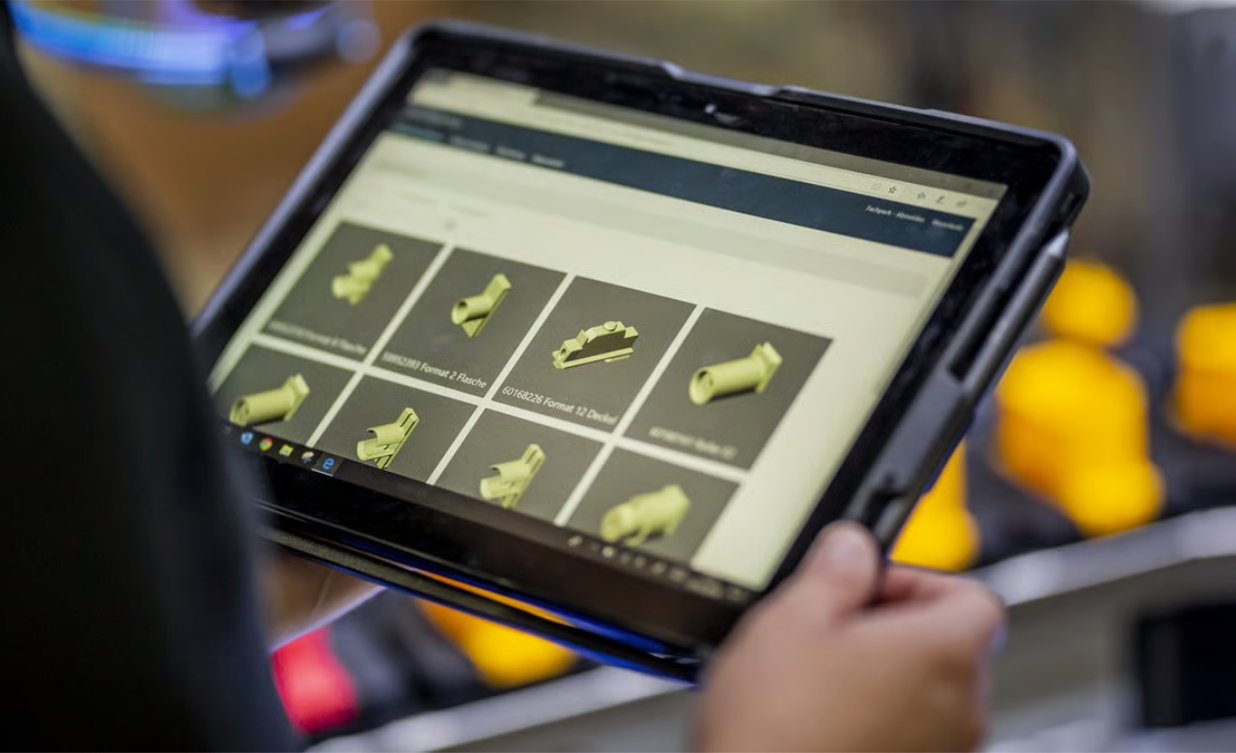
3D printing offers another option. Instead of keeping every part on a shelf, manufacturers can keep the design as a digital file and produce the physical component only when it is needed. This approach, often described as product-on-demand or inventory-free manufacturing, moves manufacturing closer to the point of use.
This does not mean that warehouses will disappear overnight. Some components will always make sense to manufacture in large quantities. But for slow-moving spare parts, discontinued components, and products that need to be customised, keeping the design rather than the finished product can make much more sense.
Physical spare part storage is quickly becoming a thing of the past. Find a digital warehouse solution to help you shorten supply chains, eliminate part obsolescence, cut costs, and minimize lead times.
This approach is particularly useful for industries where equipment stays in service for many years like appliances, mobilities, etc….
A good example is the railway industry. Older trains can remain operational for decades, but the companies that originally produced their components may stop manufacturing them. Even when a replacement part is still available, suppliers may require large minimum orders that are difficult to justify for a part that is rarely needed.
A UK railway company called Angel Trains has used 3D printing to produce obsolete interior components, including armrests, on demand. Rather than waiting for a legacy supplier to manufacture a replacement, the part can be produced when it is actually required.
As James Brown, Data and Performance Engineer at Angel Trains, explains:
“An obsolete replacement part can be 3D printed on-demand and installed immediately, enabling operators to better maintain its trains and get vehicles back into service more quickly, thus improving the quality of service for passengers.”
The benefit is not limited to saving warehouse space. Producing a part closer to where it is needed can also reduce lead times and make it easier to keep older equipment operating.
Ready to Bring Your Ideas to Life?
Upload your model and get an instant quote
High quality , Fast delivery