
Beyond MOQ:
The End of Minimum Order Quantities From Bulk Orders to One-Off Parts
For decades, manufacturing economics have been built around one basic idea: the more parts a company produces, the lower the cost of each part becomes. This model works well when products are standardized and demand is predictable, but it becomes much harder to justify when companies need smaller quantities, frequent design changes, or customized products.
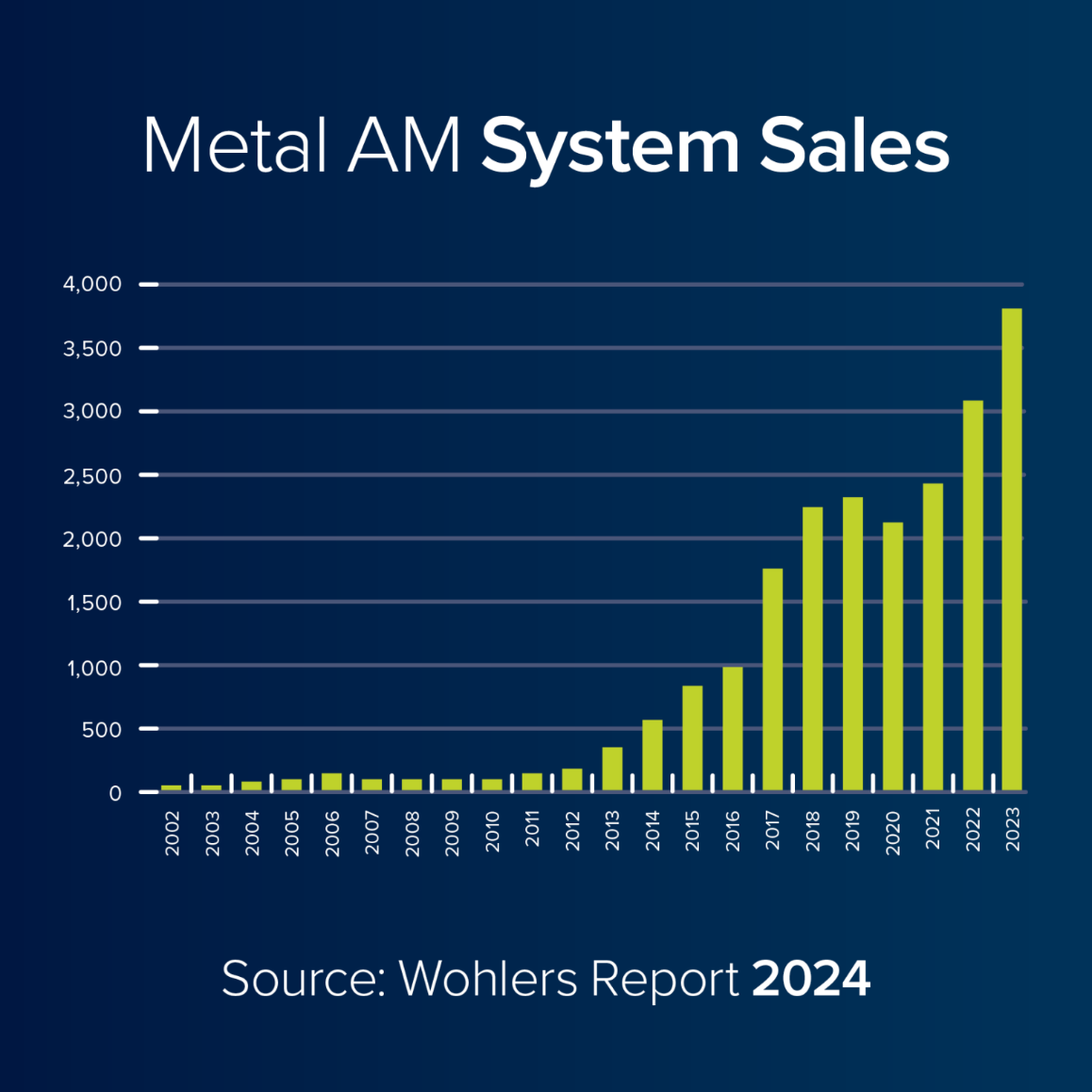
3D printing, also known as Additive Manufacturing (AM), is changing that calculation. What started mainly as a tool for rapid prototyping has developed into a production technology capable of making functional end-use parts. In 2024, the global 3D printing market surpassed USD 20 billion, and the technology continues to expand as part of Industry 4.0.
Moving Beyond the Minimum Order Quantity
Traditional manufacturing often requires a company to commit to a certain production volume before making a project financially viable. Processes such as injection moulding and stamping depend on physical tooling, and that tooling can represent a significant upfront investment. A mold, for example, can cost anywhere from $2,000 to more than $100,000, depending on its size, complexity, and material.
That creates a simple problem. If a company only needs a few hundred parts, the tooling cost can make each part unnecessarily expensive. Producing more units spreads that initial investment across a larger number of parts, which is why traditional manufacturing tends to favour large production runs.
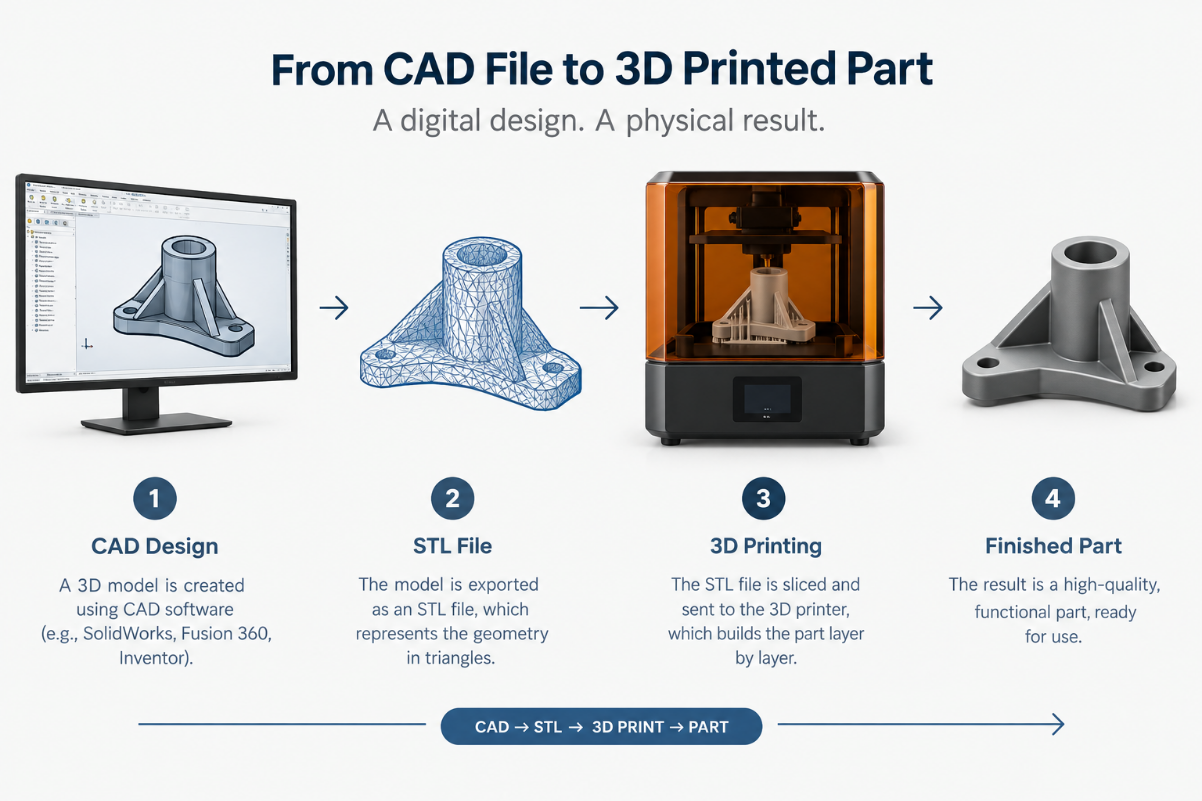
3D printing approaches the problem differently. There is no mold that needs to be manufactured before production can begin. The machine works directly from a digital CAD file, This makes small production runs much easier to justify. A company can produce a batch of one, a few dozen parts, or several hundred without first committing to a large tooling investment. For products with uncertain demand, this can also reduce the risk of producing thousands of parts that may never be sold.
Making Customization Economically Practical
The same change in economics also makes customization much easier.
With conventional manufacturing, changing the geometry of a product can mean changing or replacing physical tooling. That can be expensive and time-consuming, particularly when the product is already in production. With 3D printing, the change can often be made directly to the digital design.
This opens the door to mass customization. A manufacturer can produce different versions of the same product without having to create a separate mold for every variation. That makes it possible to produce customized products at a scale that would have been difficult to justify using conventional manufacturing methods.
This makes 3D printing particularly interesting for low- and medium-volume production. The point at which one process becomes cheaper than the other depends on the part, material, machine, and production volume. Whether you are a manufacturer, engineer, or consultant, the key is not simply to ask which technology is cheaper, but which process delivers the best overall value for the specific application.
Ready to Bring Your Ideas to Life?
Upload your model and get an instant quote
High quality , Fast delivery