
From a Physical Inventory to a Digital Inventory
A New Supply Chain Advantage
In an era defined by global supply chain disruptions and rising fuel prices, the strategic importance of reducing physical transport cannot be overstated. Traditional manufacturing often forces businesses to run a “logistical gauntlet,” where spare parts or customized components must be shipped from overseas, incurring massive lead times and high-tier freight fees.
Localized production enabled by AM allows businesses to bypass these hurdles. By fabricating products at or near the point of use, companies can effectively “design out” the costs of distance and mitigate the impact of volatile trade tariffs. A Research suggests that by installing 3D printers directly in a warehouse for on-demand part manufacture, organizations can save up to 85% on shipping costs. For Australia, the idea is particularly relevant. The country’s large distances, high labour costs, and exposure to international supply-chain disruptions make it relatively expensive for simple parts to travel across the world. A spare part needed at a remote mining site in Western Australia may have to travel thousands of kilometres before it reaches its destination. If that part is relatively small and suitable for additive manufacturing, producing it closer to the site could save valuable time and money.
The same principle applies to other industries. In regional areas, waiting for a replacement component can mean waiting for the next truck, ship, or aircraft. In some cases, the cost of the downtime is much higher than the cost of the part itself.
This is where distributed manufacturing becomes important.
Rather than relying on one large factory to supply every customer, production can be distributed across several locations. The same digital design can be manufactured at whichever facility is closest to the point of demand and has the appropriate equipment.
The result is a supply chain that is less dependent on moving physical products long distances.
Supply Chain Resilience against Global Bottlenecks
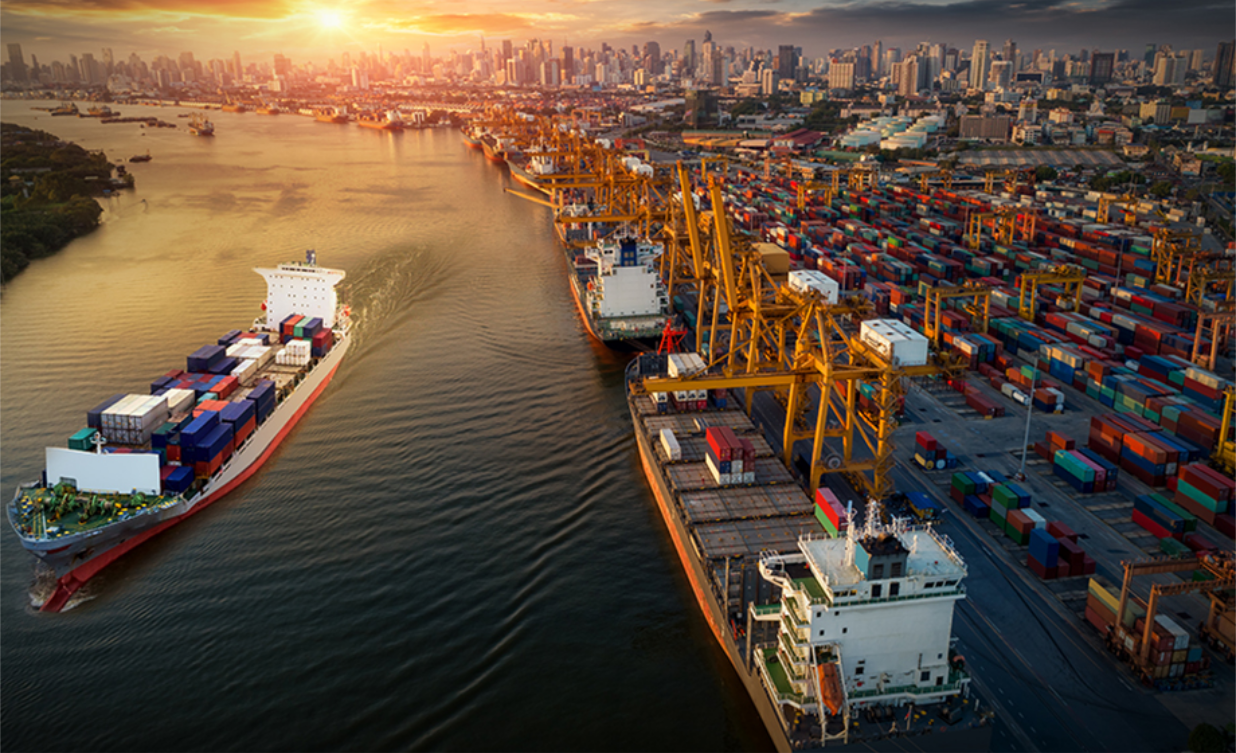
Global trade disruptions, maritime bottlenecks, tariffs, and volatile shipping rates frequently stall conventional supply chains. 3D printing offers an agile “stop-gap” or permanent alternative that bypasses traditional shipping channels altogether: Lower Susceptibility to Disruptions: In industry surveys, 9% of manufacturers specifically cited low susceptibility to global supply chain issues as their primary reason for choosing 3D printing over legacy processes.Bypassing Shipping Deadlines: When traditional overseas tooling or component shipments face delays, manufacturers turn to in-house additive networks to maintain production. For instance, automotive supplier Brose 3D printed 250,000 seat clips in-house for the BMW X7, successfully hitting delivery deadlines that would have been missed due to conventional supply chain delays
Logistics on Wheels: The Integrated PIT Structure
A significant innovation in modern logistics is the merging of production with the transportation phase itself. This is the Integrated Production-Inventory-Transportation (PIT) model, or “mobile additive manufacturing.” Inspired by patents filed by entities like Amazon Technologies, this model equips delivery trucks with 3D printers to fabricate orders in-transit. The impact of PIT is most visible in “rush orders.” By fabricating a part during the drive to a customer, the manufacturer eliminates on-site inventory and achieves a near-instantaneous transition from order to delivery.
Ready to Bring Your Ideas to Life?
Upload your model and get an instant quote
High quality , Fast delivery